
Dates
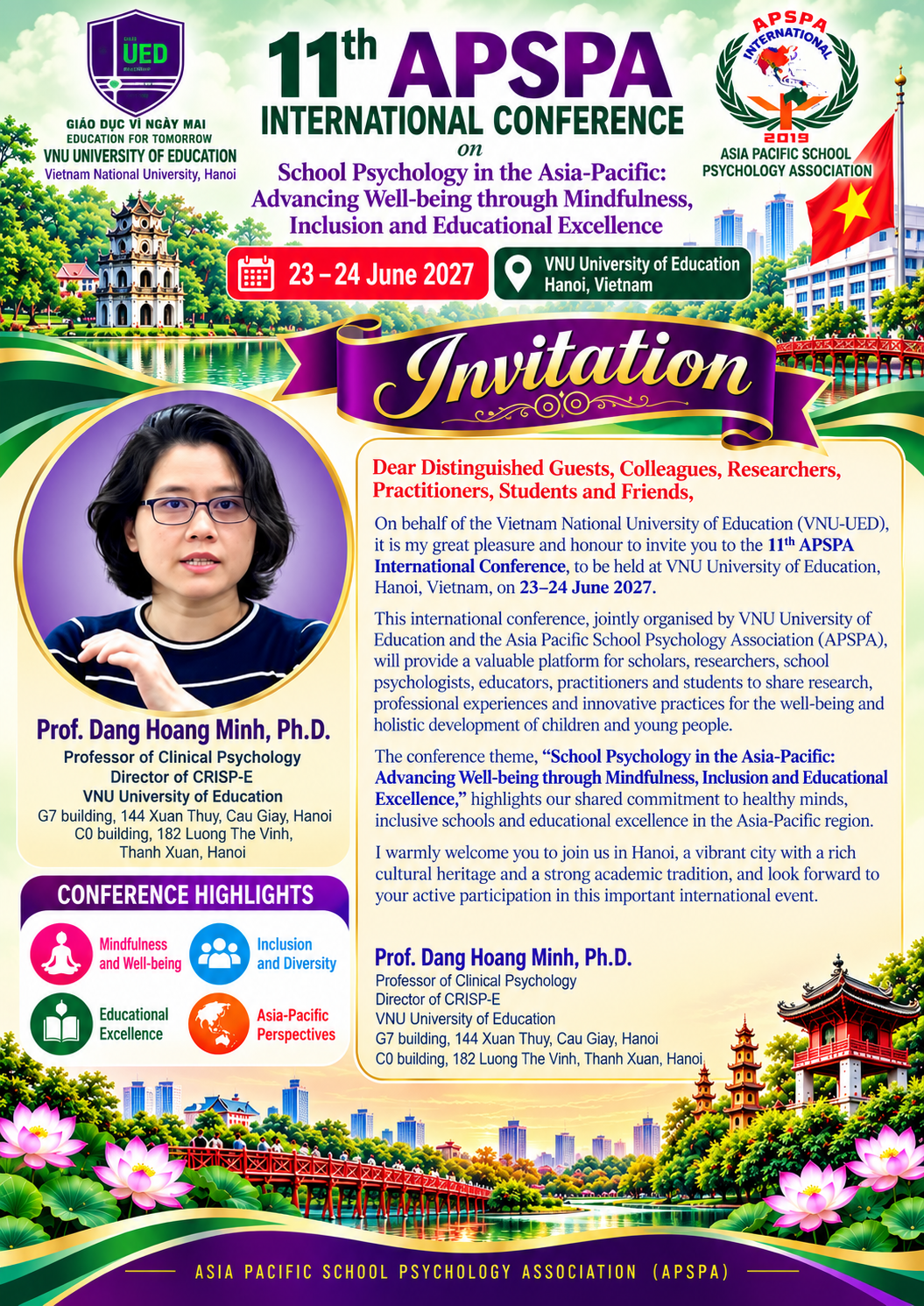
23–24 June 2027
Two days of academic and professional exchange.
Conference Theme: School Psychology in the Asia-Pacific: Advancing Well-being through Mindfulness, Inclusion and Educational Excellence
Jointly organised by VNU University of Education, Hanoi, Vietnam, and the Asia Pacific School Psychology Association. Join researchers, school psychologists, educators, counsellors and students on 23–24 June 2027 to exchange research and practices that support healthier, more inclusive schools.
Abstract submission deadline: 15 March 2027 at 5.00 pm. Time zone to be confirmed by the organisers.

Dates
Two days of academic and professional exchange.
Venue
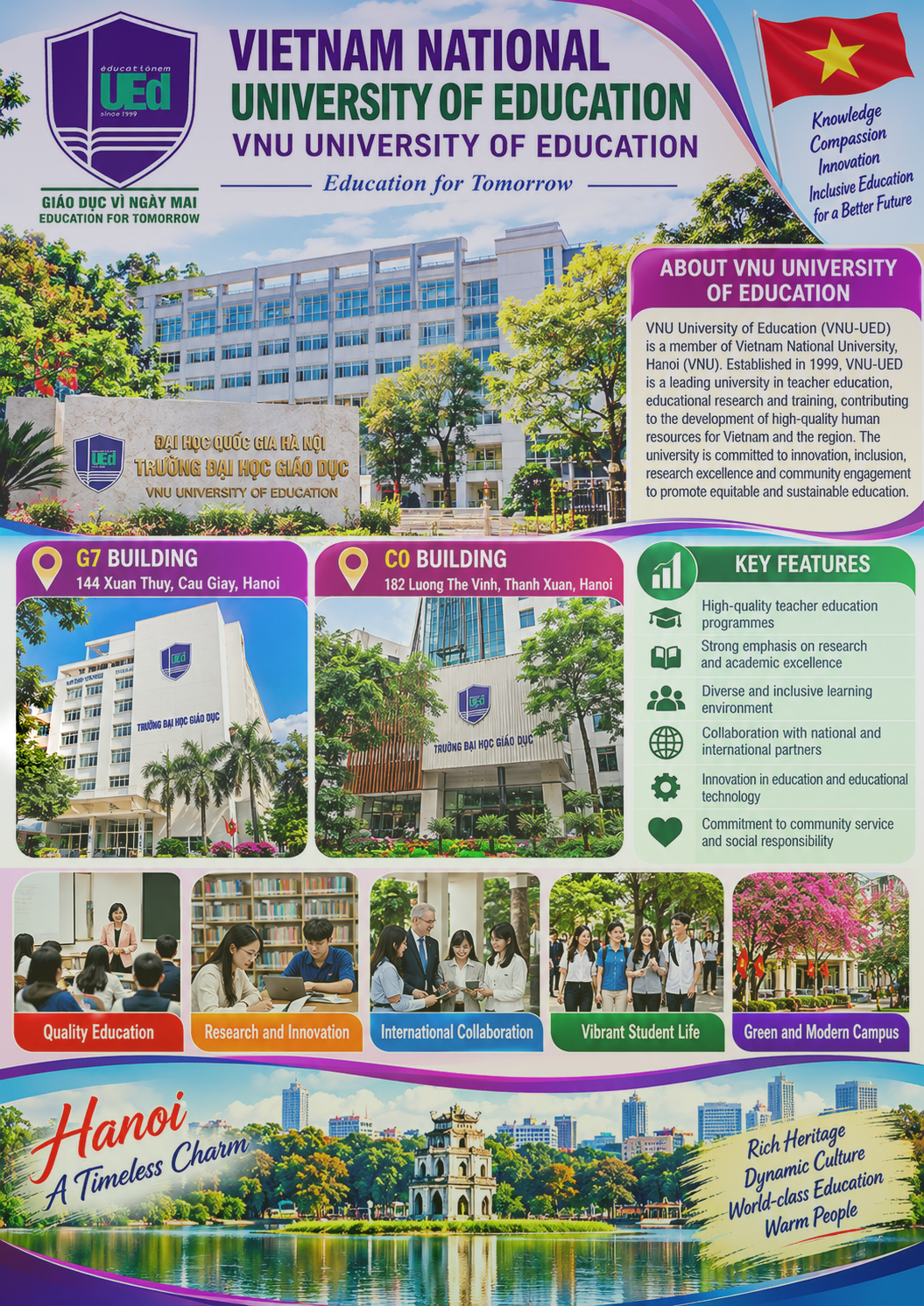
The conference will be held at the University of Education, Vietnam National University, Hanoi, Vietnam (VNU UEd), 144 Xuan Thuy Street, Dich Vong District, Hanoi, Vietnam.
Vision
Supporting wellbeing, holistic development and educational excellence.
VNU University of Education is a leading Vietnamese institution for teacher education, educational sciences, research and professional development. Established as a university in 2009, it grew from the Faculty of Education founded in 1999.
Its work spans educational management, teacher development, educational technology, assessment and psychology. The Institute for Clinical Research on Society, Psychology, and Education supports research, training and practice in psychology, education and health.
Founded in 2019, APSPA is a professional, non-profit international organisation advancing School Psychology across the Asia-Pacific region. It connects academics, psychologists, educators, counsellors, researchers and students.
The association promotes children's and adolescents' wellbeing, inclusive education, mental health, resilience and culturally responsive practice through training, research and international collaboration.
The conference explores how psychological practice, research and collaboration can respond to the diverse needs of children and adolescents across the Asia-Pacific region.
Mindfulness, positive psychology and mind–body approaches supporting emotional regulation, resilience, concentration and wellbeing.
Equitable educational opportunities and psychological support across cultural, linguistic, social and ability backgrounds.
Psychologically informed teaching, learning, counselling, teacher development and school systems.
Culturally responsive approaches recognising regional educational traditions, community contexts and professional practices.
Selected scholarly contributions may be considered for APSPA/InSPA academic publications, subject to editorial requirements and peer review. The conference also seeks to develop partnerships for research, training, publications and professional exchange.

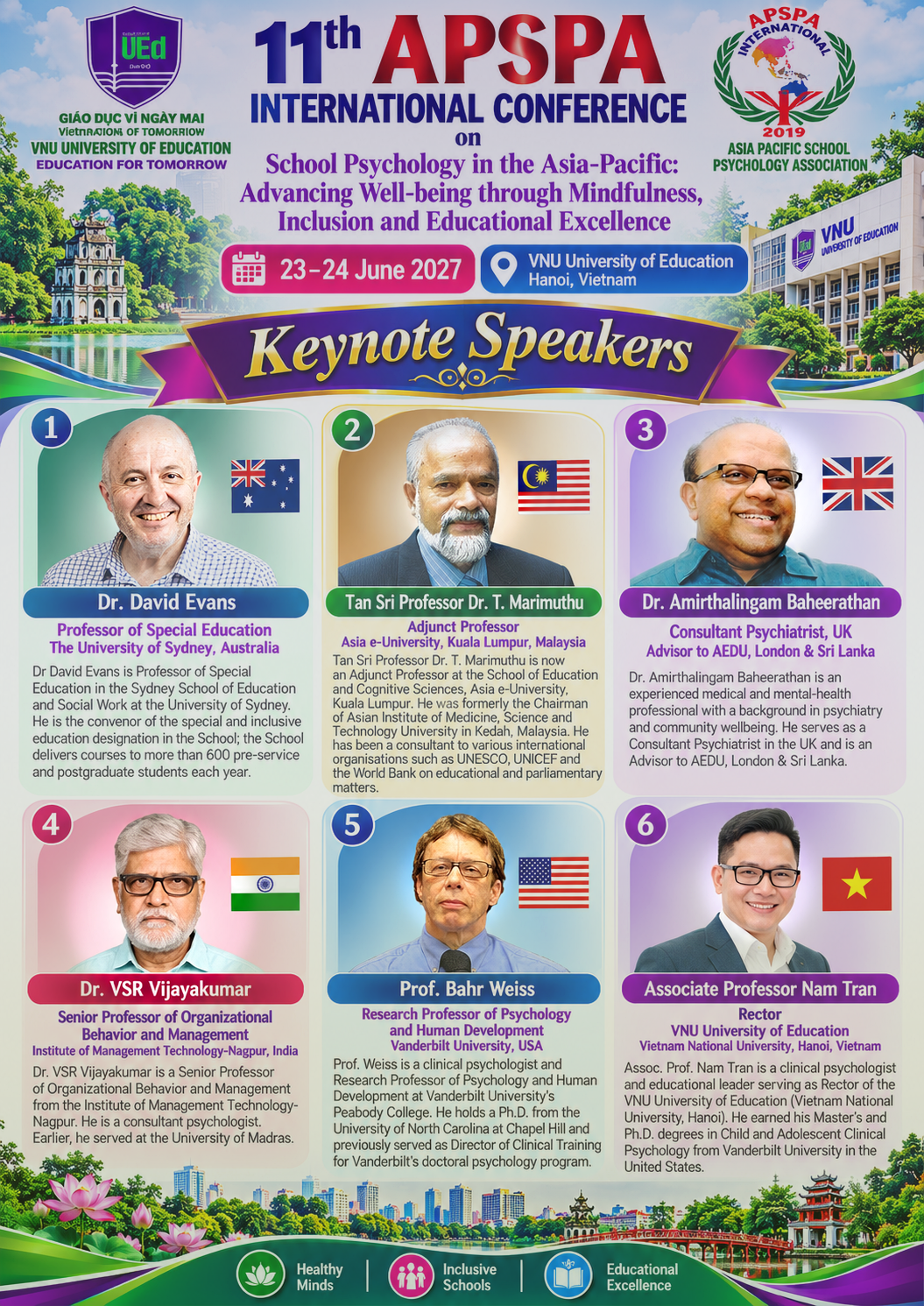
Professor of Special Education, Sydney School of Education and Social Work, University of Sydney, Australia
Prof. David Evans is a distinguished academic and researcher in Special and Inclusive Education at the Sydney School of Education and Social Work, The University of Sydney. He has extensive experience in pre-service teacher education and postgraduate professional learning, supporting educators to develop the knowledge and skills required to design inclusive educational programmes for students with diverse learning needs.
His research focuses particularly on inclusive education, special educational needs, teacher attitudes and self-efficacy, evidence-based educational practices, curriculum design, and Universal Design for Learning (UDL). His research has included studies conducted in Australia and internationally, including work involving Indonesia, mainland China and Saudi Arabia.
Prof. Evans is the Convenor of the Special and Inclusive Education designation at the University of Sydney, which provides specialist education and professional development for preservice and postgraduate students. He also contributes actively to professional learning programmes for teachers, including initiatives addressing learning support, literacy and numeracy, student behaviour, and inclusive classroom practices. His academic work and professional engagement reflect a strong commitment to educational inclusion, student wellbeing, equitable learning opportunities, and evidence-informed practice, making his expertise highly relevant to contemporary School Psychology and inclusive education in the Asia-Pacific region.
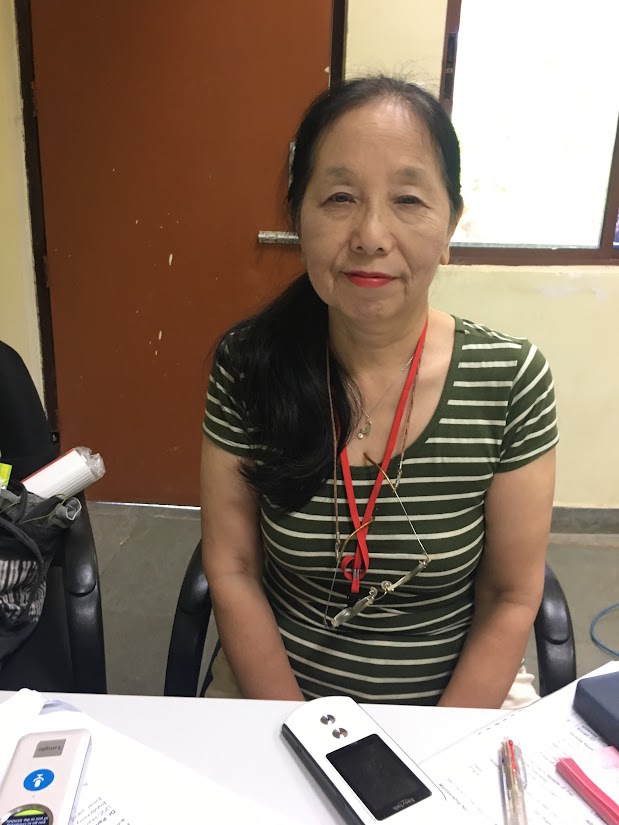
Professor of Psychology, Tokyo University of Graduate Studies and Social Welfare, Tokyo, Japan
Prof. Michiko Ishikawa, is Professor of Psychology, Tokyo University of Social Welfare, Japan. She has a Master’s in Education from Aichi University of Education, Japan, and a Doctorate Degree in Psychology from Nagoya University, Japan. Presently she is Professor (Specially Appointed Professor) at the Department of Contemporary Business, Nagoya Sangyo University. She has held positions as Professor, Graduate School, Tokoha University (Apr 2016 - Mar 2021), Professor, Graduate School, Kyoto University of Education (Apr 2014 - Mar 2016), and Professor, Faculty of Education, Bukkyo University. She started her career as a High school teacher, Aichi Prefectural Board of Education (2 years in Junior High School and High School as a Branch School) (April 1978 - March 2014). She is an Editorial Consultant of the International Journal of Asia Pacific School Psychology. She is a member of Gifu Prefecture - Bullying Prevention Study Council in Japan. She regularly publishes research papers in reputed journals.

University of Madras, Chennai, India
Dr.VSR Vijayakumar is a Senior Professor of Organizational Behavior and Management from the Institute of Management Technology-Nagpur. He has a Ph.D. in Psychology from the University of Madras and an MA in Psychology from Presidency College, Madras. His research interests are in Managerial Psychology, Organizational Culture, and Management styles. He also presented and published many research papers and articles in various international conferences and journals. He is the chief mentor of Skills grow. He has served in several institutions such as Madras Christian College, PSG College of Arts and Science, Department of the Psychology University of Madras, Kirloskar Institute of Advanced Management Studies, ICFAI Business School as a faculty member, Jaipuria Institute of Management, Indore, and as Senior Professor of Organizational Behavior and Management from Institute of Management Technology-Nagpur.

Vanderbilt University, USA
Prof. Weiss is a clinical psychologist and Research Professor of Psychology and Human Development at Vanderbilt University’s Peabody College. He holds a Ph.D. from the University of North Carolina at Chapel Hill and previously served as Director of Clinical Training for Vanderbilt’s doctoral psychology program.
Internationally recognized for his work in global mental health, Dr. Weiss focuses on child and adolescent psychopathology, cross-cultural interventions, and mental health capacity building in Southeast Asia. He played an instrumental role in establishing Vietnam’s first evidence-based Ph.D. program in clinical psychology and serves as a Visiting Foreign Professor at Vietnam National University in Hanoi, Vietnam. His research investigates how cultural contexts shape adolescent aggression, coping mechanisms, and mental health outcomes following adverse childhood experiences. By evaluating culturally adapted therapies and advising on national standards like clinical licensure in Vietnam, Dr. Weiss bridges psychological science and global community mental health implementation.

Rector, VNU University of Education, Hanoi, Vietnam
Assoc. Prof. Nam Tran is clinical psychologist, and educational leader serving as Rector of the VNU University of Education (Vietnam National University, Hanoi, Vietnam). He earned his Master's and Ph.D. degrees in Child and Adolescent Clinical Psychology from Vanderbilt University in the United States. Throughout his academic career, Dr. Nam has dedicated his research to clinical psychology, school mental health, adolescent behavioral interventions, and parent-child educational dynamics
Beyond administrative and teaching roles, Dr. Nam is a widely recognized public intellectual in Vietnam. He frequently contributes expert insights on educational reform, modern parenting, school psychology, and student career guidance across media platforms and educational forums. At VNU University of Education, his leadership continues to bridge international psychological research with practical applications to improve mental health support and pedagogical strategies in Vietnamese education.

Psychologist and Chief Executive Officer, Alcohol & Drug Foundation NSW – Kathleen York House, Australia
She is a psychologist and Chief Executive Officer of Alcohol & Drug Foundation NSW – Kathleen York House, a specialist residential rehabilitation service supporting women experiencing substance use disorders, including mothers who reside with their children during treatment.
With more than 40 years of clinical and leadership experience across India, Germany and Australia, Dr. Nithyanandam brings an international perspective to psychology, alcohol and other drug treatment, disability services, and women- and family-inclusive care. She holds a PhD in Applied Psychology from the University of Madras, with professional training and experience in Germany.
Her professional interests include psychology, substance use, trauma, mindfulness, mind-body approaches, women’s wellbeing, culture and family-inclusive practice. She has contributed to research, professional resources and conferences and has held leadership roles with the Australian Psychological Society and the NSW AOD sector.
She currently serves on the Board of the Sydney Drug Education and Counselling Centre and previously served on the NADA Board. Her contribution to the sector was recognised with the NADA Outstanding Contribution to the Sector Award (2025).
15 minutes per presentation, within 90-minute sessions of up to five presenters. Contributions may cover theory, research, programmes, professional practice, experiences or policy relevant to the theme.
Printed posters and digital formats where applicable. Sessions normally last 60 minutes; presenters should remain with their posters for discussion. Accepted posters receive an assigned board number, date and time.
90 minutes, with a Chair/Discussant and up to five presenters. Proposals require a title of up to 150 characters, an integrative statement of up to 250 words, chair details and affiliation, and 3–5 keywords. Include a title (up to 150 characters) and abstract (up to 250 words) for each presentation.
Normally 60 minutes, with clear learning objectives, methodology and expected outcomes. Topics include counselling, inclusive education, mindfulness and wellbeing, assessment, teacher development, digital wellbeing and AI.
Contributions may explore ethical AI, data privacy, digital safety, digital citizenship, AI-supported education, student wellbeing and technology for social good.
Abstract deadline: 15 March 2027 at 5.00 pm. The deadline time zone and further submission instructions are awaiting confirmation.
Workshops normally last 60 minutes.
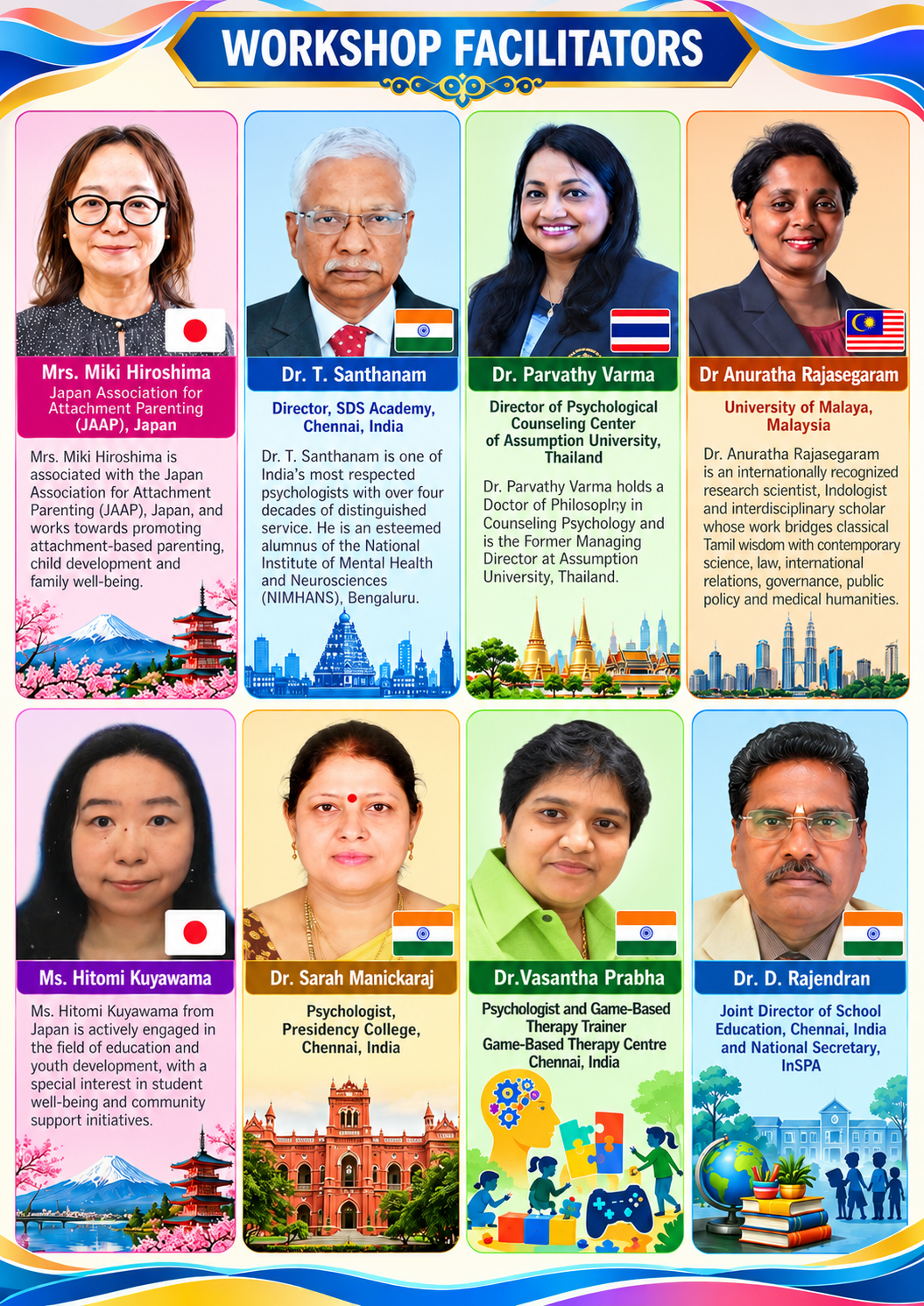
Mrs. Miki Hiroshima · Japan Association for Attachment Parenting (JAAP)
Secure attachment, responsive parenting and positive parent–child relationships, including Attachment Yoga, mindfulness-based parenting and instructor development.
Dr. Sarah Manickaraj and Dr. Vasanrha Prabha · Chennai
Activities using puzzles, block designs, picture completion, word association and board games to develop attention, memory, decision-making and problem-solving.
For psychologists, school teachers and school counsellors. Maximum 30 participants.
Dr. T. Santhanam · Director, SDS Academy, Chennai
Harnessing Artificial Intelligence for Specific Learning Disabilities (SLD) screening, assessment and remedial education. Explore responsible AI use, learner profiles and individualised interventions while distinguishing screening, assessment and diagnosis.
Dr. Govindarajolou Kumaran · Kums Yoga International, Hong Kong
Practical mindfulness for relaxation, stress reduction, emotional regulation, concentration, resilience and self-compassion in everyday life and professional settings.
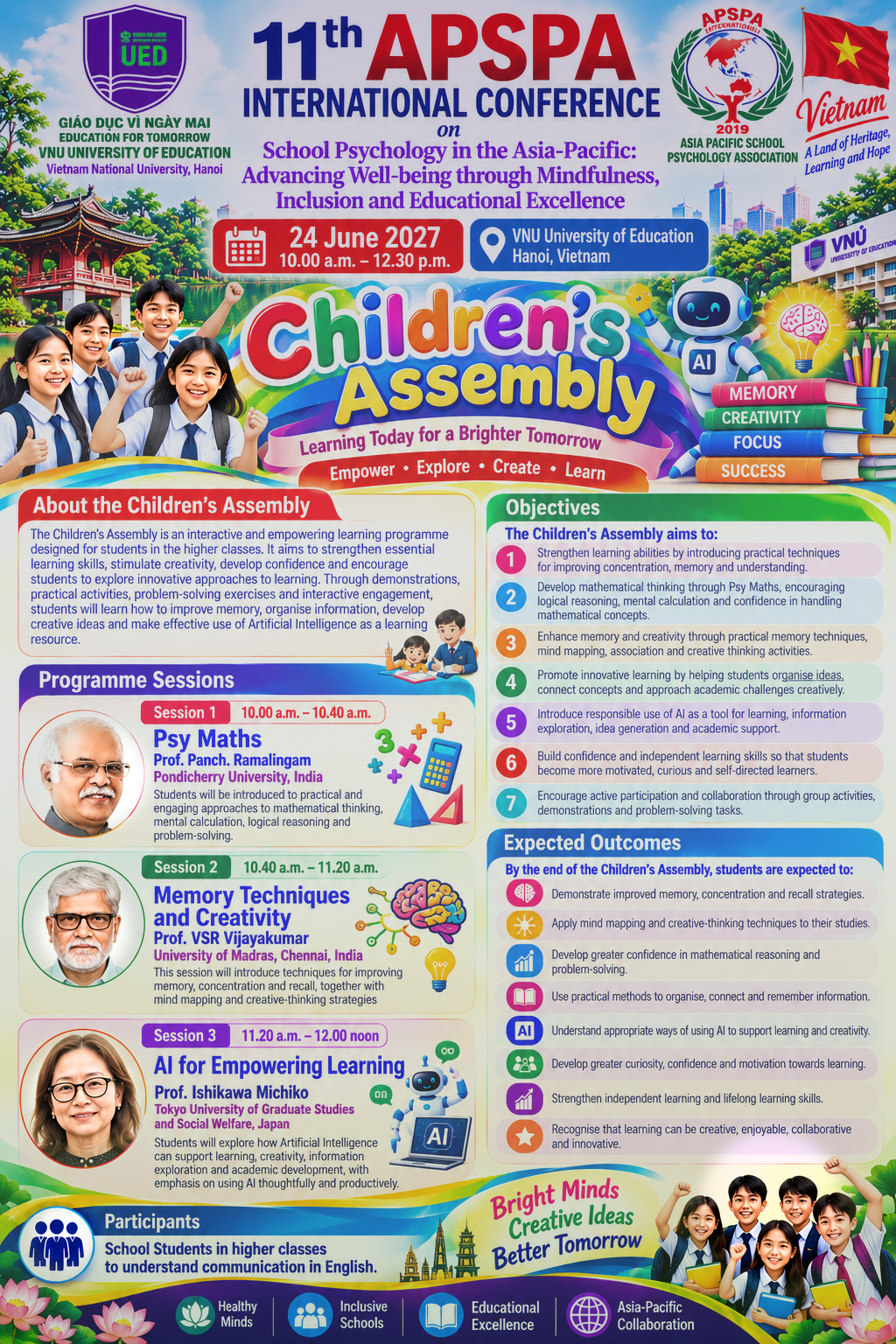
23 June 2027 · 2.30–4.00 pm
Facilitator: Prof. Panch. Ramalingam, Pondicherry University.
24 June 2027 · 10.00 am–12.30 pm
For students in higher classes who understand communication in English. Activities develop memory, mind maps, concentration, creativity, confidence and independent learning.
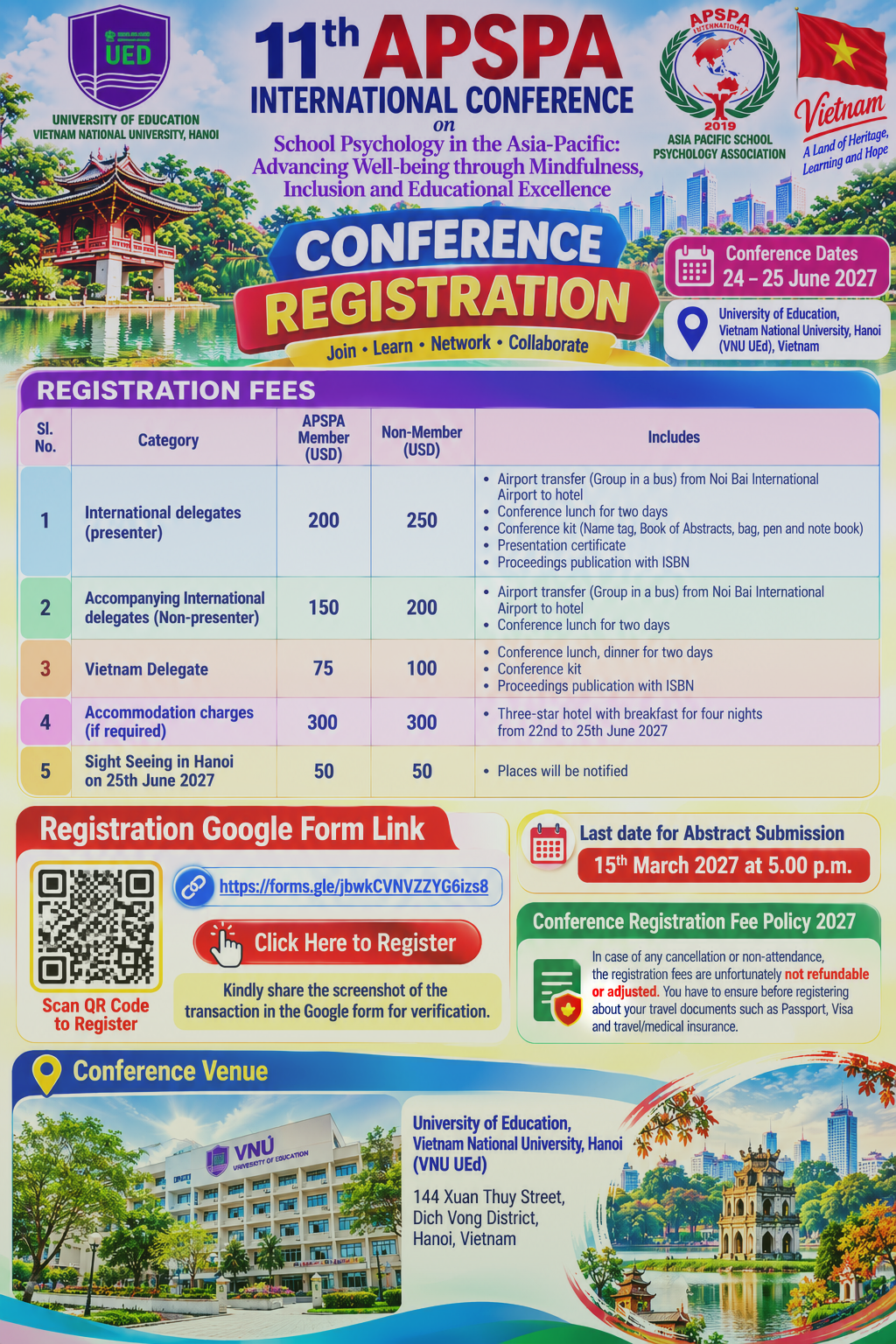
| Category | APSPA member | Non-member | Includes |
|---|---|---|---|
| International delegate (presenter) | $200 | $250 | Shared coach transfer from Noi Bai International Airport to the designated conference hotel; lunch for two days; conference kit and proceedings publication with ISBN. |
| Accompanying international delegate (non-presenter) | $150 | $200 | Shared coach transfer from Noi Bai International Airport to the designated conference hotel and lunch for two days. |
| Vietnam delegate | $75 | $100 | Conference kit and proceedings. |
| Optional accommodation | $300 | $300 | Three-star hotel with breakfast for four nights, 22–25 June 2027. |
| Sightseeing · 25 June 2027 | $50 | $50 | Sightseeing in Hanoi, Vietnam; places will be notified. |
All participants must pay the registration fee. For each paper or poster, at least one author must register and attend. Registration rates and optional services are listed below in USD. Consult the registration form for payment instructions.
Presenter registration includes conference lunch for two days, a kit with name tag, book of abstracts, presentation certificate, bag, pen and notebook, and proceedings published with an ISBN. Inclusions vary by category as listed below. Share a screenshot of your payment transaction in the registration form for verification.
Open registration formRegistration fees are non-refundable and cannot be adjusted in case of cancellation or non-attendance.
Before registering, ensure that your passport, visa and travel or medical insurance arrangements are in place.
Chairperson: Prof. Dr. Dang Hoang Minh
Professor of Clinical Psychology and Director of CRISP-E, VNU University of Education.
International President: Prof. Panch. Ramalingam
International President, APSPA; President, InSPA.
International Logistics: Dr. R. Rajesh
Madurai Kamaraj University, India.
Vice-chairperson: Associate Professor Doan Nguyet Linh, Head of the Department of Research and Collaboration Development, VNU University of Education.
Prof. Dang Hoang Minh
Professor of Clinical Psychology
Director of CRISP-E
VNU University of Education
G7 building, 144 Xuan Thuy, Cau Giay, Hanoi, Vietnam
HT 2 Hoa Lac Campus
Telephone: +84-24-7301 7123
The conference will be held at the University of Education, Vietnam National University, Hanoi, Vietnam (VNU UEd), 144 Xuan Thuy Street, Dich Vong District, Hanoi, Vietnam.
Nearest international airport: Noi Bai International Airport (HAN).
Prof. Panch. Ramalingam, President, APSPA
Prof. T. Santhanam, Vice-President, APSPA
Email: apspa2019@gmail.com
WhatsApp: +91-9443352476
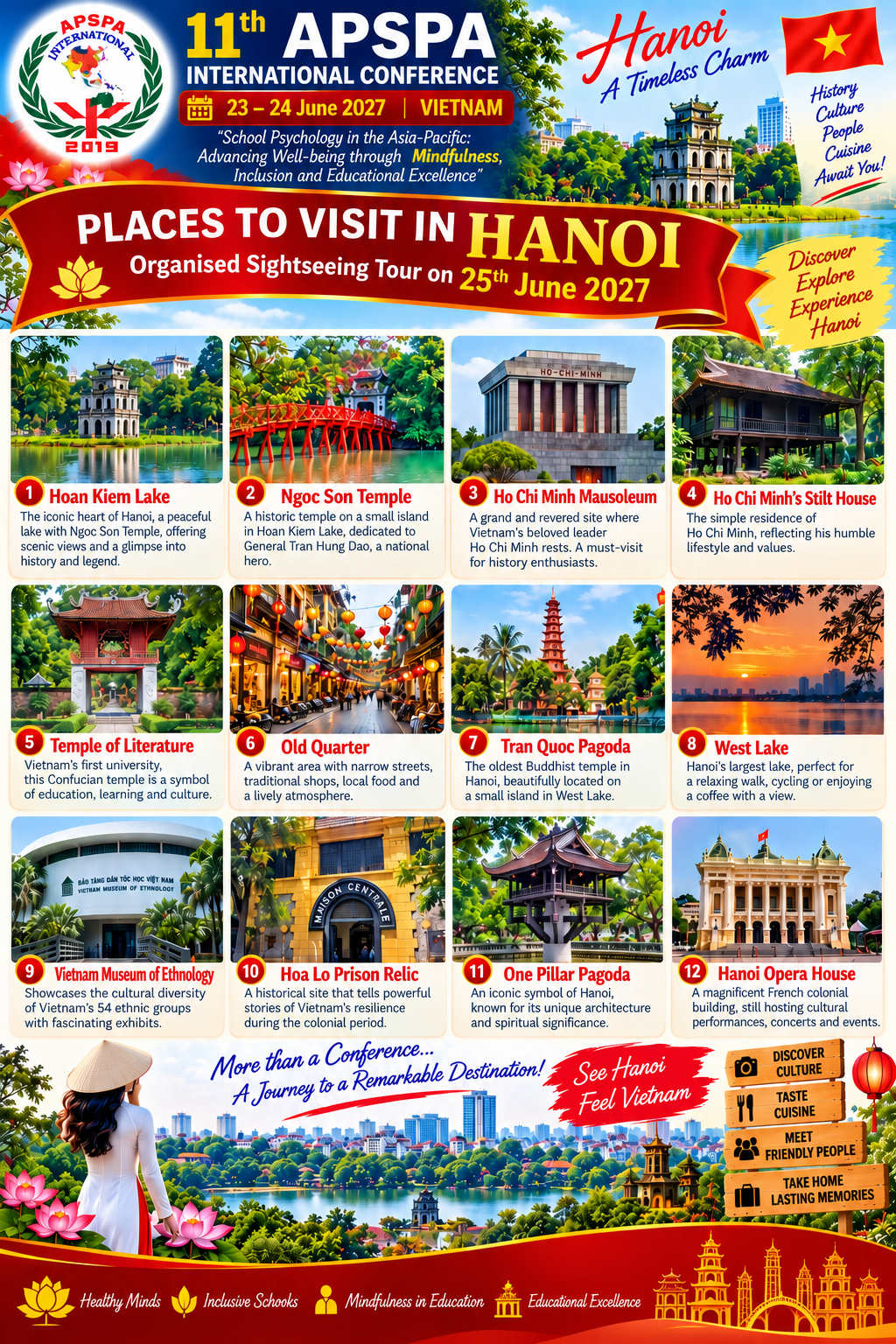
Sightseeing and cultural events
Sightseeing in Hanoi, Vietnam is scheduled for 25 June 2027 at USD 50 per person. Places to visit, social events and cultural fest details will be announced.